



Buying a ticket from another person can be exciting, but it can also turn a good night out into a stressful guessing game. I have used TicketSwap as a practical middle ground between buying directly from an event organizer and taking a chance on an informal resale post. It is a free events app from TicketSwap that lets people buy and sell tickets, with its main appeal being a more organized and reassuring process than arranging everything through messages.
That does not mean it removes every decision. You still need to check the event, date, ticket type, and transfer details carefully. What it does well is put the transaction in a dedicated environment, so the buyer and seller are not forced to build their own system from scratch. For concerts, festivals, sports events, theatre, and other ticketed occasions, that difference can matter when plans change at short notice.
How I decide whether TicketSwap is the right choice
My first question is not simply whether tickets are available. I want to know how much confidence I need in the transaction, how quickly I need to act, and whether I am buying a standard ticket or something with special restrictions. Those details determine whether a resale marketplace is useful or whether buying from the original organizer is the safer and simpler route.
TicketSwap is most appealing when an event is sold out, when somebody in my group can no longer attend, or when I want to sell a ticket without posting personal contact details publicly. The app gives that situation a proper destination instead of leaving the whole process to a social network post, a chat group, or a classified listing.
I also look at how much flexibility I need. If I am deciding between several events, I want an app that keeps the search focused on tickets rather than making me sort through unrelated listings. If I already know the official seller still has tickets at a reasonable price, I would normally start there. Resale is most useful when availability, timing, or convenience makes the official route less suitable.
The app has been available since January 8, 2016, and its maturity is visible in the way it is positioned: it is not a general marketplace that happens to include tickets. Events are the central purpose. That makes the experience easier to understand for someone who only wants to find a valid ticket or pass one on to another attendee.
What the buying experience feels like
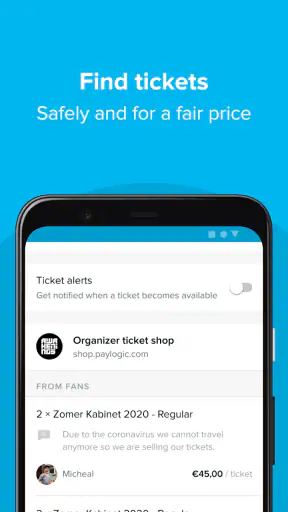
When I use TicketSwap as a buyer, I approach each listing as a decision rather than an automatic purchase. I check the event name, venue, date, ticket category, and any information attached to the listing before committing. A clear event-focused interface helps here because the important question is not whether a ticket looks attractive in isolation, but whether it matches the plan I am actually making.
A realistic example is a weekend concert where one friend drops out on the morning of the event. Searching through ordinary resale posts can mean dealing with several people at once, waiting for replies, and trying to judge whether a screenshot is genuine. With TicketSwap, I can look for the event in one place and compare available listings within the same context. That does not guarantee that the exact ticket I want will appear, but it reduces the amount of improvised communication.
My biggest practical tip is to decide the acceptable ticket type before browsing. A standing ticket, seated ticket, early-entry ticket, and VIP ticket may all belong to the same event while offering very different experiences. If I browse first and read later, it is easy to focus on availability and overlook a restriction that matters to my group.
I would also keep the app open while making plans, rather than relying on an old screenshot or forwarded message. Resale availability can change quickly. If another person is buying for me, I make sure we agree in advance about the exact event and ticket category. That simple step prevents the common problem of two people assuming they are discussing the same listing when they are not.
Why the organized resale model is useful
The strongest part of TicketSwap is the structure around a transaction. Buying from a stranger through a social platform often requires separate steps for finding the person, checking the ticket, agreeing on a price, arranging payment, and transferring the file or entry method. Each extra step creates another place for confusion.
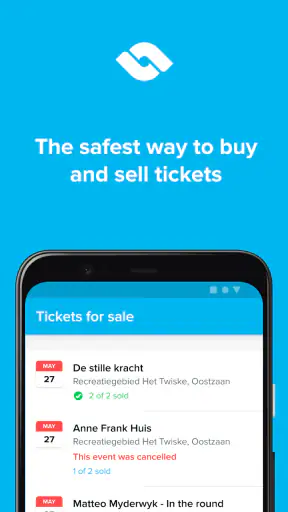
TicketSwap brings those activities into a ticket-specific setting. The app’s store positioning emphasizes secure buying and selling, and that is the right way to understand its value: not as a promise that every purchase is effortless, but as an attempt to make resale more controlled than an informal handoff.
That distinction is especially helpful for occasional users. Someone who sells tickets every week may already have a routine, but a person who has never resold an event ticket may not know what information a buyer needs or how to explain a change of plans. A dedicated marketplace provides a clearer workflow than writing “ticket available” in a group chat and answering the same questions repeatedly.
For sellers, the benefit is not only reaching potential buyers. It is also keeping the listing connected to the event rather than scattering details across separate conversations. I find that useful when I need to sell because of a schedule change and want to spend as little time as possible negotiating manually.
Small habits that make the app more practical
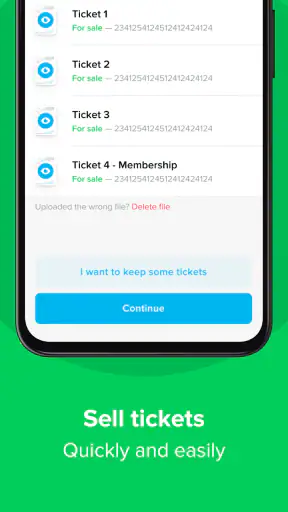
One useful habit is to prepare the ticket information before creating a listing. I would have the event details, ticket category, and any relevant entry conditions ready to review. This makes the listing more accurate and reduces the chance that a buyer will need to ask basic questions after it goes live.
Another is to treat timing as part of the selling decision. Listing too late may limit the pool of interested buyers, while listing too early may be inconvenient if plans are still uncertain. I would only post once I was genuinely ready to transfer the ticket according to the app’s process. A marketplace works best when the seller is decisive and the description matches what will actually be delivered.
For buyers, I recommend checking whether the ticket suits the whole group, not just the person making the purchase. A listing can solve the immediate availability problem but create another one if friends end up with different sections, entry times, or access levels. TicketSwap helps with the transaction; it cannot decide whether the ticket fits your group’s plan.
I also avoid treating a lower-looking price as the only advantage. The real comparison is the total effort and confidence involved. A slightly more expensive resale ticket may still be preferable to an uncertain private arrangement, while an official ticket may be better if it is readily available and offers clearer support.
Where TicketSwap wins, and where another route may fit better
TicketSwap has a clear advantage over informal resale because it is built around events rather than general conversation. Searching for a ticket is more purposeful than scanning posts in a local group, and selling is less awkward than negotiating with unknown people one by one. For me, that is the app’s main reason to exist, and it is a convincing one.
It also suits people who want a focused mobile experience. The app is free, carries an Everyone age rating, and supports devices running Android 7.0 or later. Its current version is 26.08.14073, so users with older phones should check compatibility before planning around it. The broad age rating makes sense because the app is a marketplace for events rather than an entertainment title aimed at a particular age group.
The app’s scale is another reason I would consider it before a small community group. It has more than a million installs and an average rating of 4.2 from around fifty-seven thousand ratings. Those figures suggest that it has reached a substantial audience, but they should not replace careful checking of the individual event and listing. A large user base can improve the chance of finding a ticket, yet it cannot guarantee availability for a specific occasion.
Compared with buying directly from an official event channel, the trade-off is straightforward. The official route is usually my first choice when tickets are still available and the terms suit me. It avoids the uncertainty that naturally comes with purchasing from another attendee. TicketSwap becomes more compelling when the official allocation is gone, when someone needs to pass on a ticket, or when I want a dedicated resale workflow.
Compared with general classified apps, the advantage is focus. A general marketplace may be useful when I need to buy many kinds of goods, but it often leaves the buyer and seller to agree on the practical details themselves. TicketSwap is better when the only thing I need is an event ticket and I would rather not mix that transaction with unrelated listings.
Compared with social media groups, I see an even clearer difference in organization. Groups can be valuable for local events or communities where everyone knows the context, but they also depend heavily on trust, moderation, and private messaging. TicketSwap is the better fit when I want the transaction to happen through a service designed specifically for tickets rather than through a conversation thread.
There are still cases where I would skip it. If an event has strict identity checks, unusual transfer rules, or a ticket type that is difficult to resell, I would read the event’s conditions carefully before relying on any marketplace. If I need accessibility seating, a particular entrance, or a bundled benefit, I would not assume that any available listing meets those needs. In those situations, contacting the organizer or using the official channel may be more appropriate.
The friction buyers and sellers should expect
No resale app can remove the tension caused by limited supply. If a popular event has no suitable listing, the app cannot create one. I may find myself checking repeatedly, changing the ticket category I am willing to accept, or deciding that the event is no longer worth the effort. That is a marketplace limitation, not necessarily an app failure, but it affects the real experience.
There is also a mental cost to buying from another attendee. Even with a structured service, I still need to verify what I am purchasing and make sure the event details are correct. I would not recommend rushing through the process simply because a listing appears available. A few seconds spent checking the ticket type can prevent a much bigger problem later.
Selling can be less convenient than expected when plans change at the last minute. The ticket may be easy to list, but finding a buyer depends on demand and timing. I would not buy a ticket with the assumption that I can always resell it later. That is an important trade-off: TicketSwap can provide a route out of an unwanted purchase, but it should not be treated as a guaranteed exit.
Another limitation is that the app is most useful when the event and ticket details are easy to understand. If an organizer uses complicated packages, names tickets differently from the usual categories, or attaches benefits that are not transferable, the buyer needs to do more research. The app can organize the listing, but it cannot make an ambiguous ticket straightforward.
What changes when switching from the usual alternatives
Moving from private messages to TicketSwap changes the workflow more than the basic goal. I still search, compare, pay, and prepare for entry, but I spend less time inventing the process. That is a meaningful saving for occasional buyers who do not want to become experts in ticket resale just to attend one event.
The adjustment for sellers is learning to provide complete information up front. In a chat, I might answer questions gradually. In a dedicated listing, accuracy matters from the beginning because several interested buyers may look at the same details. I see that as a healthy form of discipline, although it can feel slower for someone used to informal arrangements.
The cost of switching is lowest when I already know the event I want. I can use the app as a targeted tool rather than changing all my ticket-buying habits. I would still check official availability first, then use TicketSwap when resale makes more sense. That combined approach gives me a fallback without making the marketplace my only source.
For a regular event-goer, the app may become part of a simple routine: check the official seller, compare the resale option, examine the ticket conditions, and only then decide. For a person who rarely attends events, installing it only when a friend cancels may be enough. The free price makes that occasional use easy, though the value still depends on whether the relevant event has suitable listings.
My recommendation for different kinds of users
I recommend TicketSwap to people who attend concerts, festivals, sports, theatre, or similar events and want a more organized alternative to buying from strangers through social media. It is particularly useful when tickets are sold out, when plans change, or when a seller wants to reach interested attendees without managing a long private conversation.
I would also recommend it to groups that coordinate plans carefully. The app can make the search more focused, but I would still agree on the required ticket category before anyone buys. That small bit of preparation is more important than it may seem, especially when several versions of a ticket exist for the same event.
I would not make it my first choice when official tickets are readily available, when the event has complicated transfer restrictions, or when I need a special arrangement that is difficult to describe in a standard listing. In those cases, the organizer’s own sales channel may offer clearer answers and fewer moving parts.
Overall, I see TicketSwap as a sensible decision tool rather than a magic solution. It gives ticket resale a dedicated home, makes informal buying feel more structured, and is easy to try because it is free. Its real strength appears when I need a ticket that is no longer available through the usual route or when I need to sell one responsibly. If you treat each listing as a purchase to verify rather than a bargain to grab instantly, TicketSwap is a useful and practical companion for event planning.


